You have almost certainly seen digital signage today without thinking about it: the menu above a coffee shop counter, the screen in a bank window showing mortgage rates, the departure board at a station or the notice screen in a GP surgery. This guide explains what digital signage is, how it works and why so many UK businesses are replacing printed posters with screens.
The simple definition
Digital signage is the use of screens to show information, promotions or messages to people in a particular place. What makes it different from a TV on the wall is that the content is managed remotely. You decide what each screen shows, when it shows it and for how long, and you can change it in minutes from a laptop or phone.
The three building blocks
Every digital signage system has three main parts.
1. The screen
This is what your customers see. It might be a wall-mounted display, a window display, a freestanding digital poster, a video wall, an outdoor screen or a touch screen kiosk. For business use, commercial displays are the norm because they are designed to run for long hours every day.
2. The media player
The media player is the small computer that stores and plays your content. It may be built into the screen or be a separate box behind it. Our guide to media players explains the options.
3. The software
A content management system (CMS) is where you upload images and videos, build layouts, create playlists and set schedules. With cloud software, you log in through a web browser and your changes are sent to your screens over the internet. Read more in how cloud-based digital signage software works.
What can you show?
Almost anything that helps your customers or your team:
- Promotions and offers, such as seasonal sales, new products or meal deals.
- Menus and price lists, updated instantly when something changes.
- Live information, like currency rates, queue information, weather or news.
- Directions and maps to help visitors find their way.
- Company news for staff in offices, warehouses and break rooms.
- Social media feeds and reviews, carefully moderated.
- Interactive content on touch screens, such as product finders or feedback surveys.
Why businesses switch from print
It is always up to date
Printed posters go out of date the moment an offer ends. Digital content can be scheduled to start and stop automatically, so customers never see an expired promotion.
It saves time across sites
If you run more than one location, you can update every screen from one place instead of posting and fitting new posters in each branch.
It catches the eye
Movement and colour attract attention far more than static print, particularly in a busy street or a crowded shop.
It is flexible
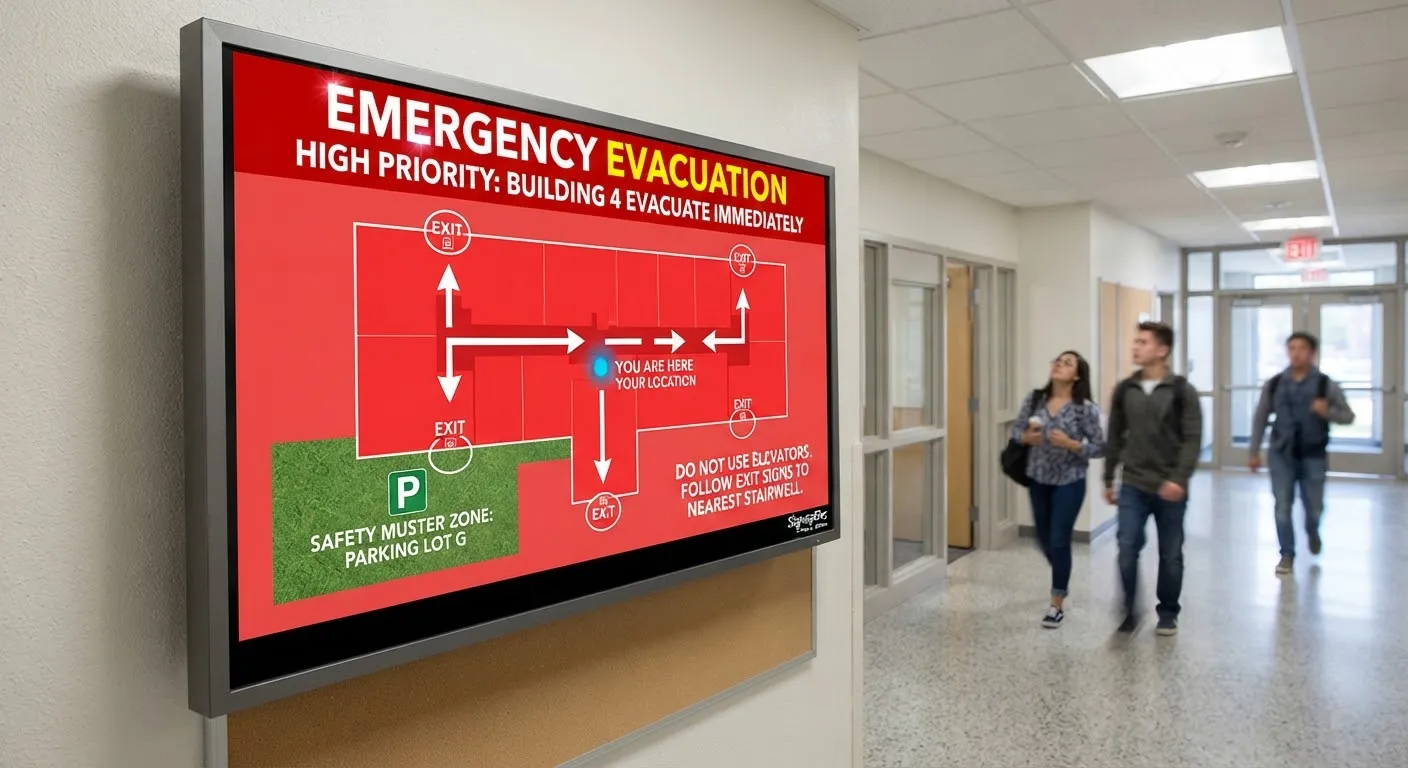
The same screen can show breakfast offers in the morning and evening deals later, or switch to an emergency message when needed.
Where digital signage is used
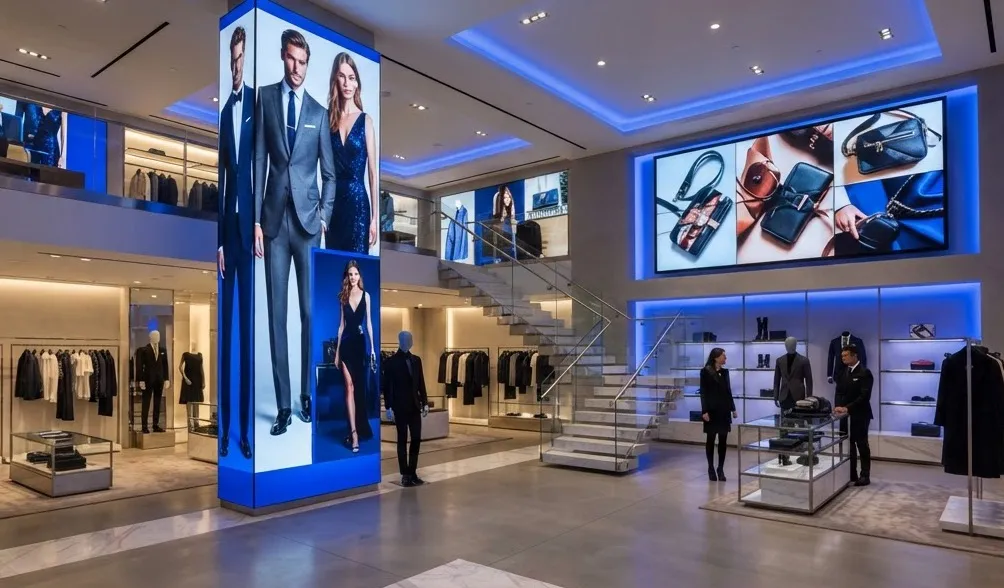
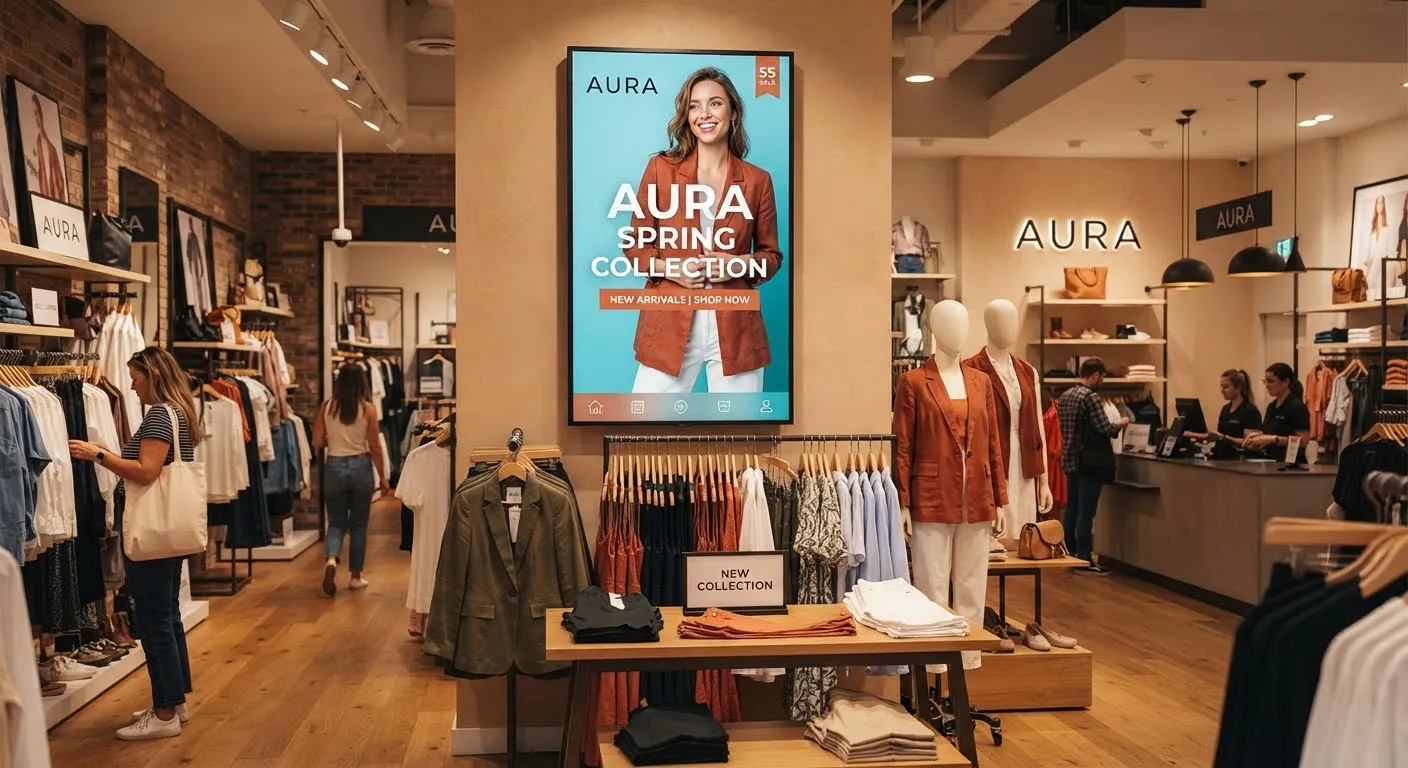
Digital signage is used in almost every sector. Shops use it in windows and on the shop floor. Restaurants use it for menu boards. Banks and currency exchanges show rates and products. Estate agents display property listings. Clinics, schools and universities share information. Offices and factories use screens for internal communication and safety messages. Explore examples on our industries page.
Do you need technical skills?
No. Modern cloud software is designed for everyday users. If you can create a slideshow or post on social media, you can manage digital signage. Many businesses also ask a supplier to design their first templates, so updating content later is just a case of changing text and images.
What does it cost?
The cost depends on how many screens you need, their size and type, how they are installed and which software you choose. We explain the main factors in our guide to digital signage costs.
Getting started
The best first step is to think about where your customers or staff pause, look or make decisions, and what you would like them to know at that moment. Then talk to a supplier about screens and software to suit.
SignageTec supplies commercial displays, players and cloud software for UK businesses of every size. Get in touch for free, no-obligation advice.